Getting a Kubota Key Cut and Programmed: What You Need to Know Before You're Stuck Without One
If you have spent any time around a building site, a farm, or a landscaping yard, you know the sinking feeling of reaching for the keys and coming up empty. A lost Kubota mini digger key is not like misplacing your house keys. You cannot just grab a spare from the drawer or call a general locksmith to cut you a copy from a blank they keep in stock. The ignition system on these machines is built to stop theft, and that same security can lock you out of your own workday.
Over the years, I have seen operators take all sorts of shortcuts when they lose a key. Some try to hot-wire the ignition switch. Others jam a screwdriver into the cylinder lock and hope for the best. A few even order a random key blank online, file it down by eye, and wonder why the machine still will not start. None of those approaches save time in the end. What actually works is understanding how a Kubota key cut and programmed process works, and finding a specialist who can handle both parts properly.
Why a Standard Key Copy Won't Work
The first thing to understand is that a modern Kubota mini digger key is not just a shaped piece of metal. Inside the plastic head of a transponder key sits a small security chip. When you turn the key in the ignition switch, the machine sends a low-frequency signal to that chip. The chip responds with a unique code. If the code matches what the immobiliser expects, the engine gets permission to start. If there is no chip, or if the chip sends the wrong code, the fuel system stays locked and the starter motor turns over a dead engine.
This is why a straightforward key duplication from a high-street kiosk will not work. They can cut the metal blade to match the key code of your cylinder lock, but they have no way to clone or program the transponder chip. You end up with a key that slides into the lock perfectly and turns the ignition switch, but the machine will not fire. It is a frustrating waste of money and time, especially when you are already losing billable hours.
The Two Halves of the Job
A proper replacement key requires two separate steps: key cutting and key programming. The cutting side is straightforward enough. A specialist uses the original key code or a working master key to cut a blank to the exact profile of your digger ignition. The tolerances on these cylinder locks are tight. A blade that is even a fraction of a millimetre off can bind in the lock or fail to rotate the ignition switch fully. Good key blanks help here. Using an OEM key or a high-quality aftermarket blank reduces the risk of premature wear on the lock pins.
The programming side is where things get more technical. The security chip inside the key fob needs to be programmed to communicate with your specific machine's immobiliser system. This is not a universal process. Different models of Kubota mini diggers use different protocols. Some use a fixed code that can be cloned directly from an existing key. Others use a rolling code system where the key and the machine negotiate a new sequence each time you start it. Some machines require the presence of two already-programmed keys before you can add a third. If you only have one working key left, you may be in a restricted state where a dealer or specialist has to use diagnostic equipment to bypass the security logic.
I have spoken to owners who tried to save money by buying a cheap key blank online and then attempting to program the chip themselves using a universal programmer they found on a forum. In most cases, they ended up corrupting the data on the chip or locking the immobiliser into a fault mode that required a full system reset. The cost of that reset, plus the downtime, far exceeded what a professional key programming service would have charged from the start.
When You Only Have One Key
A common scenario I hear about is the operator who bought a used Kubota mini digger with only one key. The dealer handed over the machine with a single transponder key and said, "Make sure you don't lose it." That is not great advice because life happens. Keys fall out of pockets. They get dropped in mud. They get run over by a dumper truck. If you lose that single key, you are in a bind. The machine will not start. You cannot just cut a new one from the key code alone if the immobiliser requires a programmed chip.
In that situation, a specialist who offers a Kubota key cut and programmed service can help. They will need some information to identify the correct key blank and the correct programming method. That usually means the machine's model number, the year of manufacture, and sometimes the Vehicle Identification Number (VIN). With that data, they can source the right transponder key, cut it to match the cylinder lock code, and program the chip so it talks to the immobiliser. The whole operation can be done remotely if you mail them your existing key or send them the key code from the lock. Once the new key is ready, it gets posted to you, and you are back in business.
Key Codes and Cylinder Locks
One detail that catches people out is the difference between the key code and the programming code. The key code is a number stamped on the original key or engraved on the cylinder lock itself. That code tells the cutter which profile to use on the key blank. It has nothing to do with the transponder chip. You can have the correct key code and still end up with a non-functional key if the chip is not programmed.
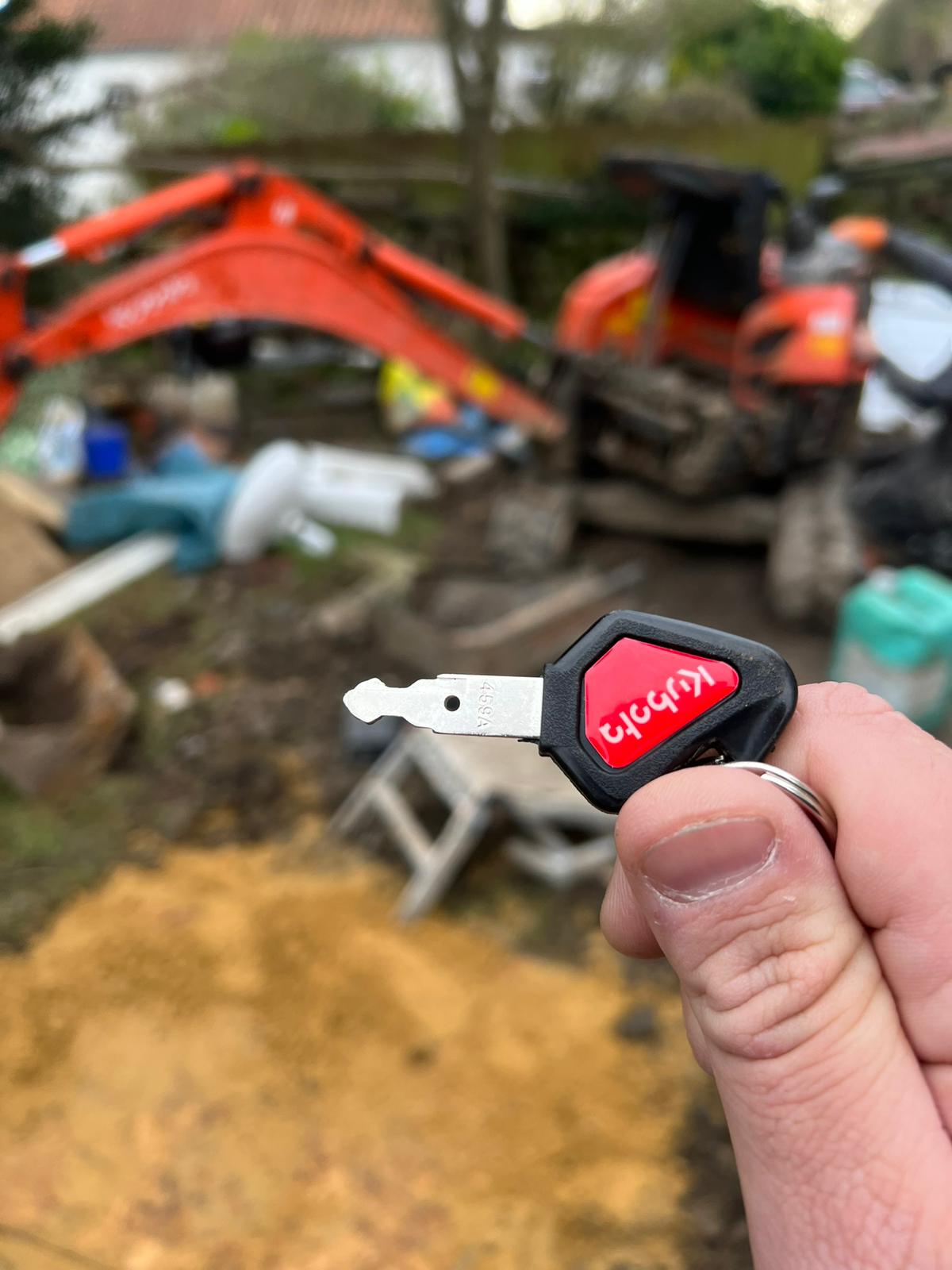
Some owners try to pull the cylinder lock out of the ignition switch and take it to a locksmith. That works for the cutting side, but again, the chip programming is a separate step. The locksmith would need access to a programmer that supports Kubota immobiliser systems. Not all general automotive locksmiths carry that equipment. A specialist who focuses on Kubota parts and keys will have the right tools and the experience to handle both steps without guesswork.
Site Keys and Fleet Management
If you run a fleet of mini diggers on a construction site, key management becomes a logistics issue. Having a single key per machine is a recipe for slowdowns. I have seen site managers waste half a morning trying to track down a key that someone left in another machine or took home by accident. Having a spare programmed key stored in a secure lockbox on site can save hours of downtime. Some operators choose to have a site key that lives in the machine's tool box, but that defeats the purpose of the immobiliser. A better approach is to keep a spare Kubota key cut and programmed for each machine in a central office, logged out only when needed.
It is also worth noting that some older Kubota mini diggers use a simpler system without a transponder chip. Those machines rely on the mechanical cut alone. For those, a standard key duplication is sufficient. But most machines built after the early 2000s have some form of immobiliser. If you are unsure which system your machine uses, check the key head. If it has a plastic body that is thicker than a standard metal key, it almost certainly contains a security chip. The presence of a key fob with buttons for locking and unlocking is another giveaway that programming is required.
What About the Ignition Switch Itself?
Sometimes the problem is not the key but the ignition switch. If the switch is worn or the contacts are corroded, even a perfectly cut and programmed key may not start the machine. I have seen cases where an operator ordered a replacement key, had it cut and programmed correctly, and still could not get the engine to turn over. The fault turned out to be a failing ignition switch that had high resistance in the start circuit. Replacing the switch and using the new key solved it. If your machine is older or has been used in wet conditions, it is worth inspecting the switch before you assume the key is bad.
Practical Advice on Ordering
When you need a replacement, the smart move is to order a Kubota key cut and programmed from a specialist who understands the differences between models. Do not assume that a key for a Kubota U17 will work on a Kubota KX040. The key blanks and transponder protocols can vary even within the same manufacturer. Provide the full model number and serial number if possible. That gives the specialist the best chance of delivering a key that works on the first try.
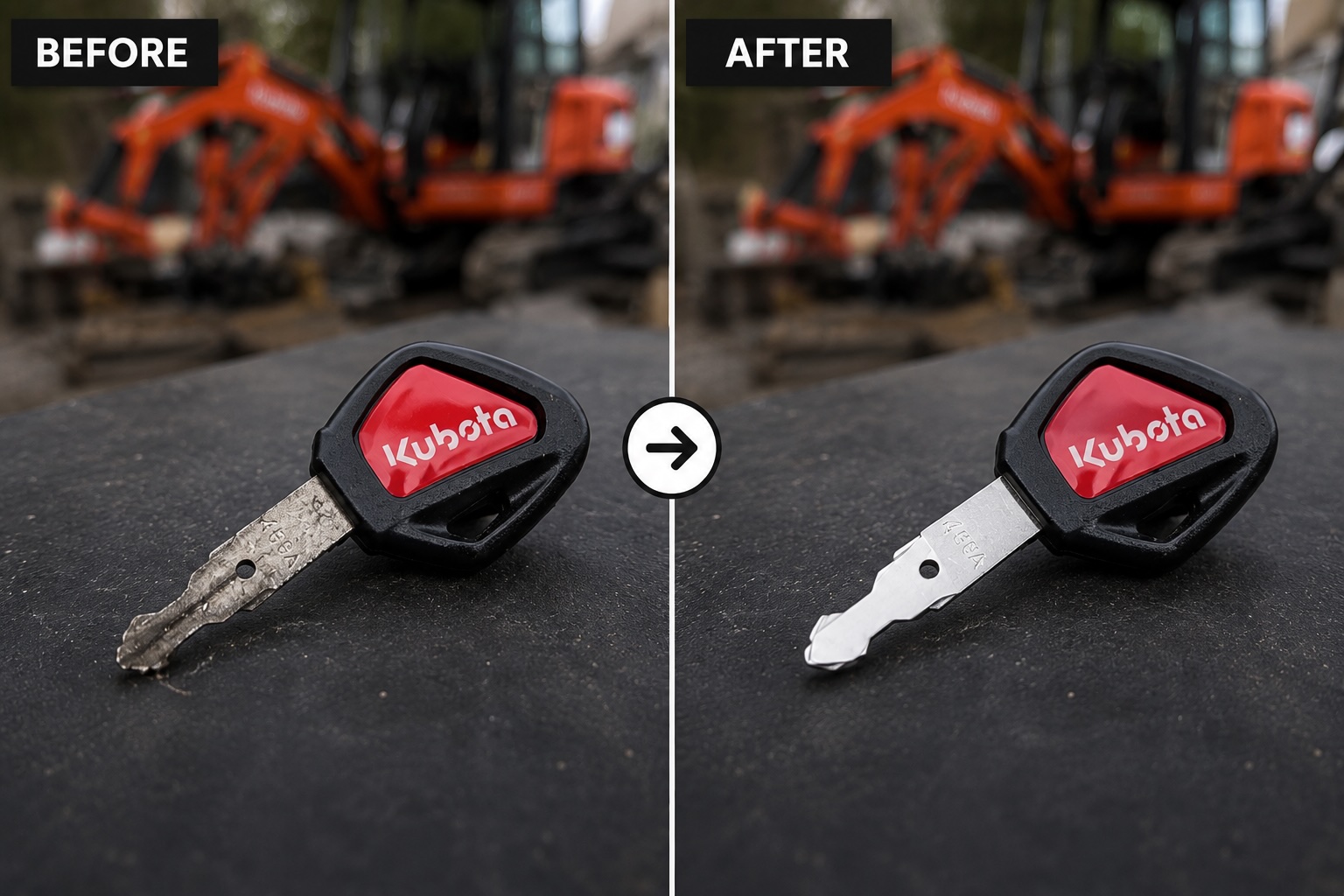
Also consider ordering two keys at once. If you currently have one working key, you can usually program a second key much more easily than if you let yourself drop to zero. Having a spare means you always have a fallback. It is a small upfront cost compared to the hassle of a full replacement later.
In the end, the process is simple once you know what is involved. It is not magic, and it is not something you can shortcut with a file and a prayer. It is a straightforward technical job that requires the right blank, the right cut, and the right programming. Get those three things right, and you will have a key that starts your digger reliably for years. Get them wrong, and you will be talking to a Kubota dealer anyway, only with more frustration and more lost time.